

I’ve a feeling we’re not in Kansas anymore.
Introduction.
I am involved in hardware, embedded software, protocols and security projects around the Internet of Things and consider myself a white-hat hacker. I provide Embedded Design & Hardware Security Consultancy Services around the Internet of Things.
Before that I was working as Principal Security Research Lead at ARM on advanced IoT security solutions to allow prevention, detection and remote recovery from attacks or malware infection on embedded devices, fog computing nodes and cloud services. One of my main security projects at Arm was the uVisor, a secure hypervisor that enforces hardware security boundaries between embedded software components using the ARMv7M memory protection unit on contemporary ARM Cortex M3/M4 microcontrollers.
I have over 20 years of professional experience in embedded programming, hardware development and the information security business. I enjoy breaking things, working on microcontroller security and improving IoT security.
My interests are grouped around hardware design, embedded systems, RF designs, active and passive RFID hardware development, custom-tailoring of embedded Linux hardware platforms, real time systems, IT-security, hardware & software reverse engineering and security evaluations of embedded systems:
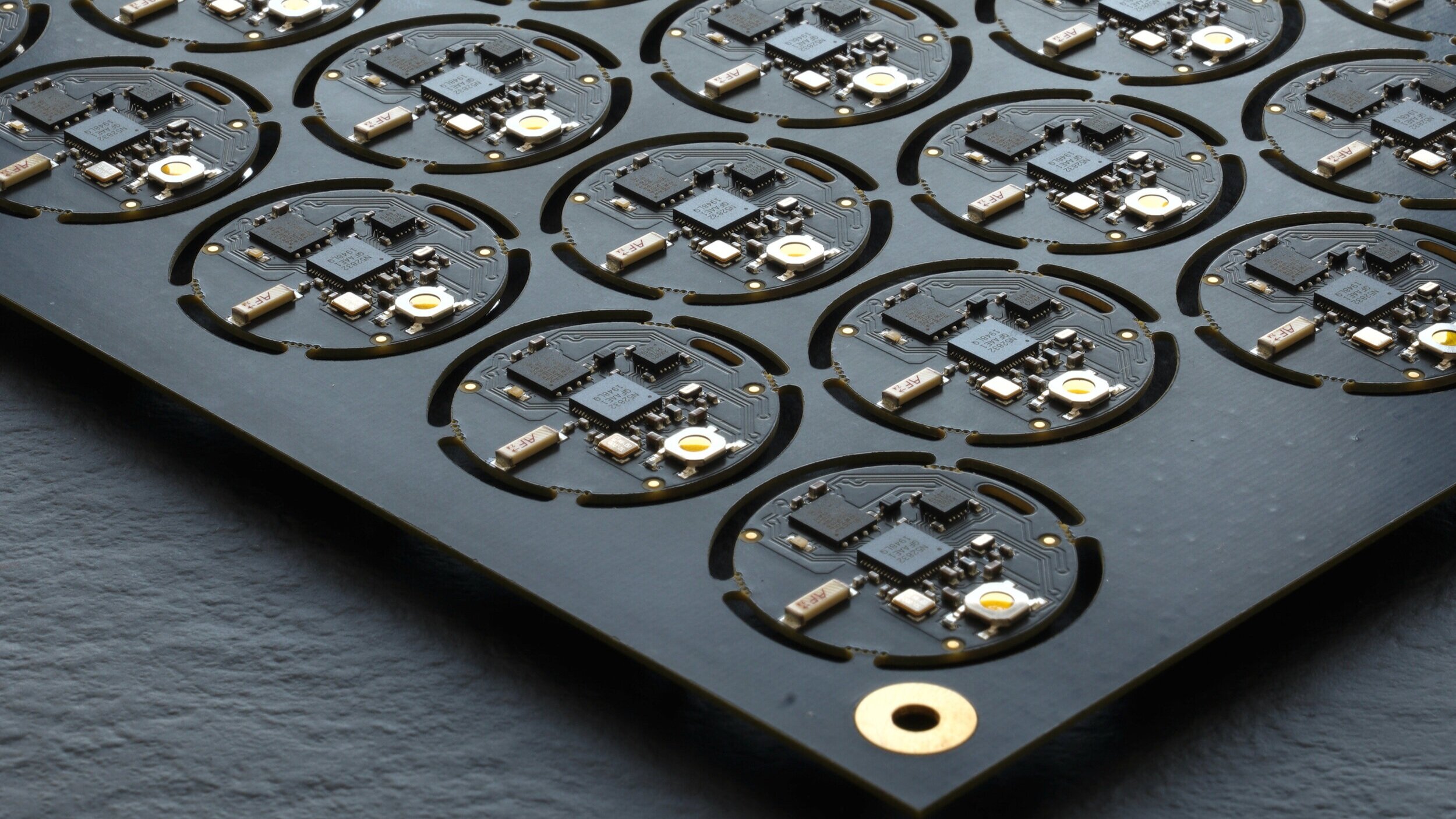
OpenBeacon nRF52 PCB Panel.
Embedded Systems & Electronics.
Build Arm Trusted Firmware for M-profile Arm CPUs in Docker
Above you can see the functionality of our OpenBeacon tracking solution for distributed logging of social contacts.

De-capped Nordic nRF51 CPU compared to a common black ant.
Hardware, Security & RFID.
Talks about hardware & making:
TII Online Seminar 2021: Everybody Is A Maker — Rapid Mechanical Prototyping Using Laser Cutters (Video, PDF)
Talks about security:
HITB+ CyberWeek 2019: Securing Your Laptop Like You Mean It - Virtualization Based Security (Video, PDF)
At eSAME Conference 2017: The challenge of scaling IoT - Modern security for microcontrollers
At Embedded World 2017: High-end security for low-end microcontrollers - Hardware-security acceleration on ARMv8-M systems
At ARM TechCon 2016: Practical real-time operating system security for the masses
A keynote at hardwear.io in 2016 on “Tower defense for hackers: Layered (in-)security for microcontrollers” in 2016.
At OSHUG 39 in 2015 on Bare Metal Bluetooth Programming. You can find the recording of the talk here.
I had fun with breaking iCLASS RFID Standard security - see HID iCLASS™ security demystified and Heart of Darkness - exploring the uncharted backwaters of HID iCLASS™ security.
Regular speaker at the Chaos Communication Congess hacker conference in 2002, 2006-2011
As one of the three maintainers of the former Xbox-Linux Project I helped breaking the Xbox security in 2002 and ported the first Linux System to the Xbox.

Blinkenstick LED light painting - long exposure.
Making & Art.
In my private time I love making/grokking things. I am playing with RGB strips to create light paintings and counter-advertising bags. I am the Co-Founder of active and passive RFID open source projects like SocioPatterns, Sputnik/OpenBeacon, OpenPCD and OpenPICC and I am committed to RFID related security research.
As a member of the Blinkenlights Stereoscope Core Team I designed the 2.4GHz OpenBeacon based wireless dimmers and Ethernet WMCU Hardware that was used in the Toronto City Hall Installation.